How do you tune into the unspoken dynamics in your organization?
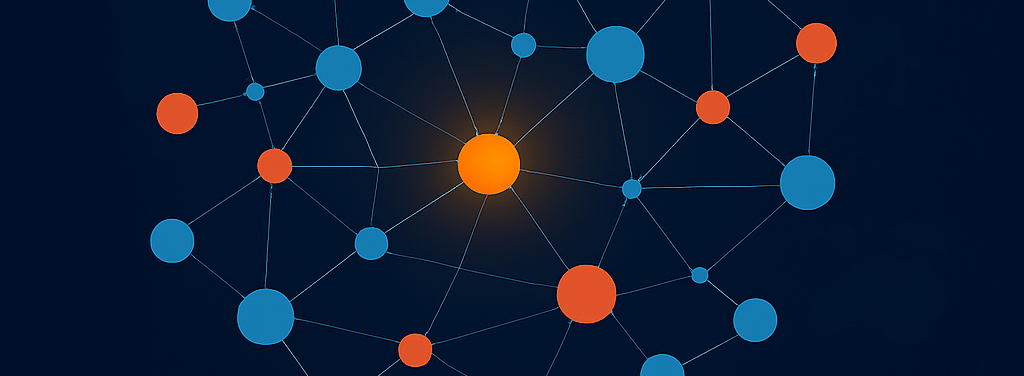
At SelFou Consulting, we don’t claim to build sociograms from scratch. What we do is help leaders see them—understand how influence flows, where trust lives, and how movement happens. For instance, across France, the UK and Canada, informal nodes form naturally according the countrys' management styles.
In France, union reps and nurse leaders shape behavior from the middle.
In the UK, fintech founders and the National Health Service (NHS) champions build coalitions that move faster than formal structures.
In Canada, Indigenous leaders and community workers guide transformation through relational leadership.
At SelFou Consulting, we help leaders read the room—not just the org chart.
France: Trust in the Middle
In Toulouse’s aerospace sector and Lyon’s healthcare networks, change rarely starts at the top. It begins with union reps, nurse managers, and regional coordinators—those who hold trust in the middle. It doesn’t sit at the top or bottom of an organization—it moves through the middle, where relationships shape real influence.
Union reps shape behavioral norms more than formal HR. The French Aerospace Industries Association (GIFAS) highlights how informal networks drive innovation across 485 member companies. Nurse managers influence care practices through peer modeling, a dynamic emphasized by Control Risks in their analysis of healthcare sector uncertainty. Regional coordinators bridge silos and activate cross-functional movement. INSEE reports strong employment resilience, while Atout France underscores the sector’s contribution to Gross Domestic Product (GDP) and global reach.
Sociograms help leaders see these nodes—not as resistance, but as leverage.
UK: Movement Through Informal Coalitions
In London’s fintech scene and across NHS networks, influence travels through informal coalitions.
Startup founders build behavioral momentum through storytelling and peer adoption. NHS champions—often outside formal leadership—drive change through trust and repetition, as shown in this BMJ Open study on Primary Care Networks. Informal WhatsApp groups and Slack channels become the real engines of coordination, a theme echoed in eWIN NHS's insights on network leadership.
Sociograms reveal these coalitions and help leaders support what’s already working.
Canada: Indigenous Networks and Relational Leadership
In Nunavut and other Indigenous health contexts, sociograms take on a relational dimension.
Community health workers are trusted behavioral guides. Elders and Indigenous leaders shape movement through story, ceremony, and presence, as described in the International Journal of Circumpolar Health. Informal coalitions often span geography, language, and tradition. Statistics Canada provides data on traditional healing and access gaps, while the Government of Canada outlines policy shifts toward Indigenous-led health program design.
From Structure to Movement
Across the world, one truth holds: transformation doesn’t follow the org chart. It follows trust.
Sociograms reveal what traditional models miss—how influence travels through informal networks, peer relationships, and behavioral catalysts. Whether it’s a nurse in Lyon, a startup founder in Manchester, or an Indigenous leader in Nunavut, change begins with those who move others.
Structure is static. Movement is dynamic. Sociograms help leaders shift from one to the other.